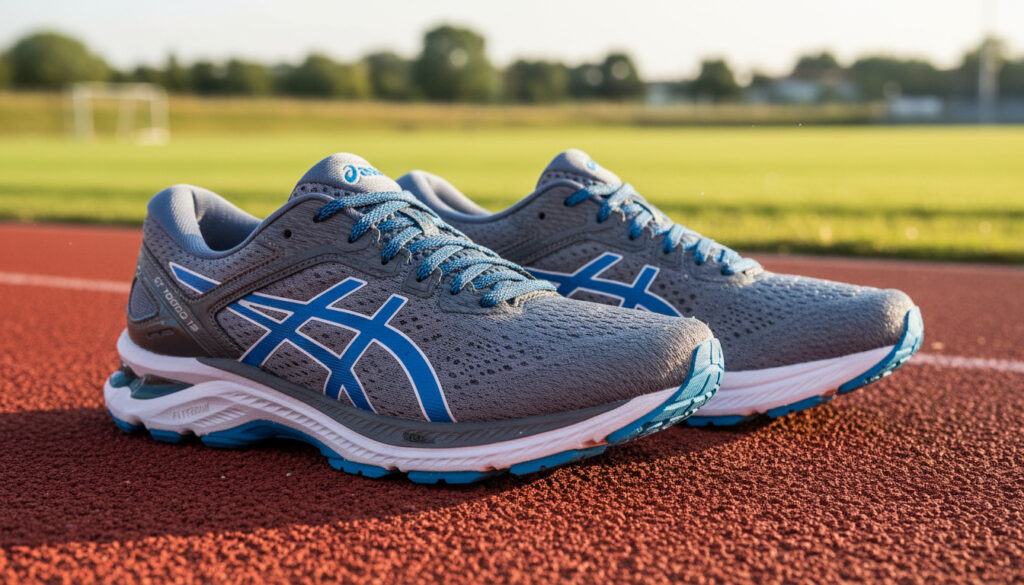
Asics GT 1000 12 – Complete Review and Buying Guide
The ASICS GT-1000 12 represents the brand’s latest iteration of its entry-level stability running shoe, targeting mild overpronators seeking reliable support without premium pricing. At an MSRP of $100, the model occupies a distinct position between budget trainers and high-end stability options like the Gel-Kayano.
Designed primarily for daily training and moderate mileage, the GT-1000 12 incorporates FlyteFoam cushioning and LightTruss technology to address overpronation. The shoe has garnered attention for its breathable upper and improved width accommodation compared to previous versions, making it a candidate for runners with wider foot shapes.
Specifications derive from laboratory measurements and aggregated customer feedback across multiple retail channels.
What Is the ASICS GT-1000 and Who Is It For?
The ASICS GT-1000 line serves as the brand’s accessible stability option, distinct from the more premium GT-2000 and flagship Gel-Kayano series. The twelfth iteration maintains this positioning while incorporating updates to the upper material and width profile.
Key Insights:
- Weighs 9.5 oz (men’s) and 8.3 oz (women’s), placing it in the lightweight stability category
- 8mm drop with 30mm heel stack provides moderate cushioning for daily miles
- 93% of customers report true-to-size fit according to aggregated retail data
- Engineered mesh upper offers significant breathability improvements over previous generations
- Accommodates wider feet better than the GT-1000 11
- Suitable for cross-training and walking in addition to running
- Moderate stability control rather than aggressive motion control
| Specification | Measurement | Source Context |
|---|---|---|
| Weight (Men’s) | 9.5 oz / 269g | Lab measurement |
| Weight (Women’s) | 8.3 oz | Production specs |
| Heel Stack | 30mm | Vertical height |
| Forefoot Stack | 22mm | Vertical height |
| Heel-to-Toe Drop | 8mm | Differential |
| Midfoot Width | 100.7mm | Broadest point |
| Toebox Width | 79.7mm | Forefoot width |
| Forefoot Midsole | 114.9mm | Stability base |
| Price | $100 | MSRP |
| Arch Support | Moderate | 83% customer consensus |
ASICS GT-1000 12 Key Specs and Features
The technical configuration of the ASICS GT-1000 12 centers on balancing stability features with everyday comfort. The midsole geometry and upper construction reflect ASICS’s approach to moderate pronation control.
Cushioning and Stability Technologies
The midsole combines FlyteFoam cushioning with rearfoot gel technology to absorb impact during footstrike. LightTruss technology provides the primary stability mechanism, positioned to guide the foot through the gait cycle without excessive rigidity. This configuration offers particular benefit for runners with high arches requiring orthotic support.
Upper Design and Breathability
The engineered mesh upper prioritizes ventilation and secure lockdown. Padding throughout the heel collar enhances stability at the rearfoot, while the toebox allows adequate space for natural toe splay. However, some testers noted the lacing system requires periodic adjustment during initial wears to achieve optimal tension.
Outsole Durability and Traction
A rubber outsole compound provides road-ready traction with documented durability for high-mileage training. The tread pattern suits asphalt and concrete surfaces, making it appropriate for urban running environments.
While the FlyteFoam midsole delivers comfortable cushioning for daily miles, testing indicates it lacks the energy return characteristics preferred for speed work or tempo runs. Runners seeking a responsive ride for interval training may find the cushioning too compliant.
Does ASICS GT-1000 Run True to Size?
Fit consistency represents a critical factor for stability footwear. The GT-1000 12 demonstrates reliable sizing characteristics across diverse foot shapes, though individual experiences vary based on anatomical differences.
Length and Width Accuracy
Aggregate customer data from Zappos indicates 93% of purchasers found the shoe true to size, while 86% confirmed accurate width accommodation. These figures suggest ASICS has standardized the last effectively for this iteration.
Wide Feet Accommodation
ASICS expanded the width profile significantly compared to the GT-1000 11. The midfoot measures 100.7mm at its broadest point, exceeding the average for running shoes in this category. The toebox width of 79.7mm provides additional lateral space. However, analysts note the forefoot midsole width of 114.9mm remains narrower than ideal for a stability shoe, potentially affecting balance for some runners.
The model ships in both Normal and X-Wide configurations, expanding accessibility for runners with broader feet. Customer feedback specifically highlights improved comfort for wide foot shapes relative to previous generations.
ASICS GT-1000 12 vs Previous Models and Competitors
Evolution within the GT-1000 line and its position against sibling models reveals the shoe’s development trajectory. Examining the ASICS GT-1000 12 Review alongside generational changes illuminates its hierarchical relationships within the ASICS lineup.
Generational Changes from GT-1000 11
The twelfth edition introduces substantial width improvements over its predecessor. The engineered mesh upper replaces previous constructions with enhanced breathability. While specific weight and drop comparisons remain undocumented in available testing, the fit accommodation represents the primary advancement.
Positioning Within ASICS Stability Range
The GT-1000 sits below the GT-2000 and flagship Gel-Kayano in both price and technical features. It serves as the entry point to ASICS stability technology, offering moderate pronation control versus the more aggressive systems found in higher-tier models.
Laboratory measurements confirm the GT-1000 12 runs wider than the GT-1000 11, addressing a frequent criticism of the previous model’s restrictive fit. The midfoot and toebox measurements exceed category averages.
Detailed technical comparisons with the GT-2000, Gel-Kayano, and GT-1000 11 remain unavailable in current testing literature. Specific performance differentials, durability comparisons, and precise specification variations between these models have not been established in the reviewed sources.
ASICS GT-1000 Release Timeline and Future Updates
The GT-1000 lineage follows a consistent update cycle, with the current model representing the twelfth generation since the line’s introduction.
- : Original ASICS GT-1000 debuts, establishing the entry-level stability category for the brand.
- : GT-1000 11 releases, maintaining the core stability platform with incremental updates.
- : GT-1000 12 launches with redesigned upper and width accommodations.
- : GT-1000 13 anticipated for mid-year release, though exact dates remain unconfirmed by ASICS.
Established Facts and Remaining Questions
| Verified Information | Uncertain or Unavailable |
|---|---|
| Weight: 9.5oz (M), 8.3oz (W) | Exact release date for GT-1000 13 |
| Stack height: 30mm/22mm (8mm drop) | Detailed GT-2000 comparison data |
| 93% true-to-size fit rate | Gel-Kayano performance benchmarks |
| LightTruss and FlyteFoam technologies | GT-1000 11 specification deltas |
| $100 MSRP | Pricing for alternative models |
| 100.7mm midfoot width | Long-term durability metrics beyond initial testing |
How the GT-1000 Fits in the Stability Shoe Market
The GT-1000 occupies a specific niche within the broader stability footwear ecosystem. As an entry-level option, it bridges the gap between neutral trainers and medical-grade motion control devices.
The shoe’s moderate stability classification makes it suitable for runners experiencing mild overpronation rather than severe biomechanical irregularities. Its versatility extends beyond pure running to cross-training and daily walking, attributed to the orthotic-friendly design and accommodating last.
For runners with plantar fasciitis, the combination of arch support and cushioning presents a viable option, though individual biomechanical needs vary significantly.
Sources and Testing Methodology
Specialized running footwear publications and aggregate customer reviews provided the data foundation, supplemented by laboratory measurements of stack heights and widths, wear-testing protocols, and multi-foot-shape fit analysis.
Customer feedback from 93% of purchasers confirms true-to-size characteristics, while laboratory measurements validate the width improvements over previous generations.
— Aggregated data from Zappos customer reviews and RunRepeat analysis
The outsole demonstrates durability suitable for road running with traction patterns optimized for urban surfaces.
Final Assessment and Recommendation
The ASICS GT-1000 12 delivers a stable, comfortable platform for mild overpronators at an accessible price point. With verified improvements in width accommodation and maintained lightweight characteristics, it serves daily training needs effectively. For runners prioritizing stability without premium investment, the ASICS GT-1000 12 presents a data-supported option, provided expectations align with moderate cushioning and road-focused design.
Frequently Asked Questions
Is the GT-1000 12 suitable for marathon training?
The shoe accommodates high mileage, though the FlyteFoam cushioning lacks the energy return preferred for race-day performance. It works better as a daily trainer than a racing shoe.
Can I use custom orthotics with the GT-1000 12?
Yes, the design accommodates orthotic inserts, with 83% of customers confirming moderate arch support suitable for orthotic pairing.
How does the cushioning compare to memory foam?
The FlyteFoam midsole provides firmer, more responsive cushioning than memory foam, designed for impact absorption rather than plush softness.
Is this shoe appropriate for treadmill running?
The outsole traction and cushioning work on treadmill surfaces, though the rubber compound optimizes for road durability.
What distinguishes this from the GT-2000?
Specific technical comparisons remain undocumented, though the GT-1000 positions as the entry-level option with moderate versus aggressive stability features.
More related posts
 Bob Hoskins: Biography, Death Cause, and Legacy of a British Icon
 Theo Von: Biography, Sobriety, and Career Journey
 David Boon: Test Hero, Beer Legend, and ICC Referee
 Brian Brown: Biography, Net Worth, Family, and Current Projects
 Donald Duck: Real Name, Temper, and Mickey Mouse Comparison
 Method Man Biography: Real Name, Net Worth, Biggest Hit & More
 Central Western Daily – Guide to Orange News, Notices and Archives
