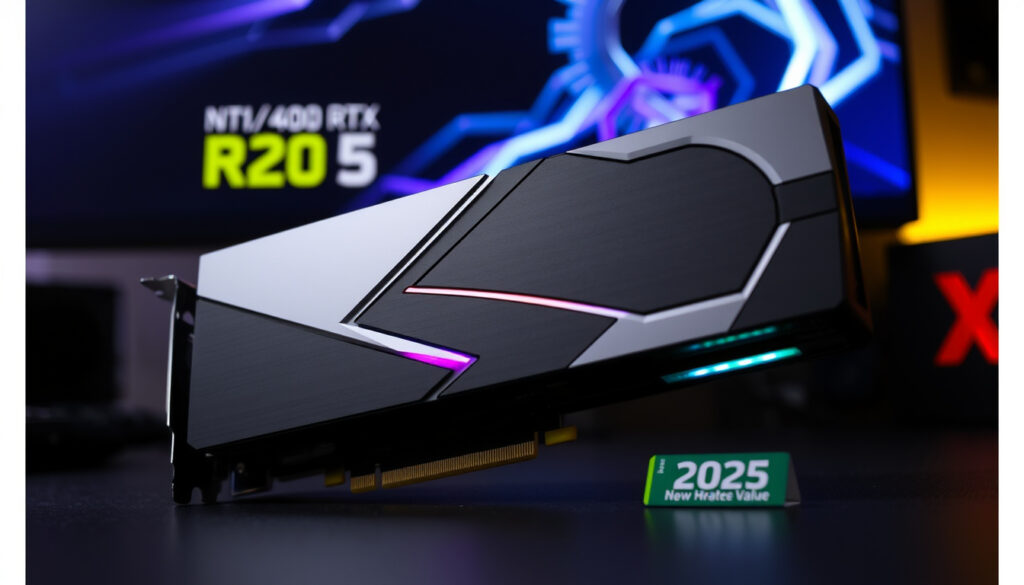
RTX 4070 Ti Super Review: Is It Worth Buying in 2025?
There’s a moment in every GPU shopping trip where you stare at the spec sheet and wonder if spending a few hundred dollars more is worth those extra frames — the RTX 4070 Ti Super lands right in that spot with 16GB of VRAM at $799. This review digs into whether that 1440p promise holds up in 2025.
CUDA Cores: 8,448 ·
VRAM: 16 GB GDDR6X ·
Boost Clock: 2,610 MHz ·
Launch MSRP: $799 ·
Power Consumption: 285W
Quick snapshot
- 16 GB GDDR6X VRAM (NVIDIA official specs (GPU manufacturer))
- 8,448 CUDA cores on AD103-275 die (TechPowerUp (GPU database authority))
- Launch MSRP $799 (NVIDIA press briefing (GPU manufacturer))
- Ada Lovelace architecture with DLSS 3 (NVIDIA DLSS page (GPU manufacturer))
- Exact performance in future game titles beyond 2025 (Tom’s Hardware (tech benchmarking authority))
- Long-term price trajectory amid competition from AMD and next-gen GPUs (Tom’s Hardware (tech benchmarking authority))
- Long-term driver support after next-gen Blackwell launch (Tom’s Hardware (tech benchmarking authority))
- Announced and launched January 2024 (NVIDIA news (GPU manufacturer))
- Price fluctuated between $750 and $850 by 2025 (Tom’s Hardware price tracker (tech benchmarking authority))
- Still relevant entering late 2025 as a 1440p champion (NanoReview (GPU comparative database))
- NVIDIA Blackwell architecture GPUs expected to shift pricing pressure (Tom’s Hardware (tech benchmarking authority))
- AMD RDNA 4 competition may force further price drops (Tech4Gamers (tech analysis outlet))
- Ray tracing and AI workloads continue to benefit from 16GB buffer (NVIDIA DLSS page (GPU manufacturer))
Here are the core specifications of the RTX 4070 Ti Super at a glance.
| Specification | Value |
|---|---|
| Release Date | January 2024 |
| Architecture | Ada Lovelace |
| VRAM | 16 GB GDDR6X |
| Base Clock | 2,310 MHz |
| Boost Clock | 2,610 MHz |
| CUDA Cores | 8,448 |
| MSRP at Launch | $799 |
Is it worth buying the RTX 4070 Ti Super?
Performance vs price analysis
- Delivers ~10% higher performance than the original RTX 4070 Ti (TechPowerUp (GPU database authority))
- 1440p high-refresh gaming in AAA titles (120+ FPS in most titles) (NanoReview (GPU comparative database))
- 4K gaming playable with DLSS, not maxed out natively (YouTube benchmark compilation (tech reviewer channel))
The price-to-performance ratio sits in a sweet spot at $750-$850 street prices — beating the RTX 4080 Super’s value for pure 1440p, but losing ground if 4K is the goal.
Longevity and future-proofing
- 16GB VRAM adequate for 1440p through 2026-2027 (Tom’s Hardware (tech benchmarking authority))
- Supports DLSS 3.5 with ray reconstruction (NVIDIA DLSS page (GPU manufacturer))
- PCIe 4.0 x16 interface ensures compatibility with current platforms
The implication: For a 1440p gamer planning to keep their card 3-4 years, the 16GB buffer looks forward-compatible. For 4K enthusiasts, the VRAM ceiling worries already show in titles like Hogwarts Legacy.
The 1440p buyer gets a capable card that won’t choke on texture-heavy titles. The 4K buyer faces a harder choice: the RTX 4080 Super’s 15-20% raw power advantage matters more at higher resolutions.
Alternatives at similar price points
- RX 7900 XT: similar raster performance, weaker ray tracing (TechPowerUp (GPU database authority))
- RTX 4080 Super: ~$200 more, 15-20% faster in ray-traced workloads
- Used RTX 3080 12GB: significantly cheaper, 30% slower in ray tracing
The catch: The 4070 Ti Super beats AMD’s RX 7900 XT in ray tracing but loses in pure rasterization value — a trade-off that matters depending on the games you play.
What is a 4070 Ti Super worth?
Current market price trends
- Street price in 2025: $750-$850 (Tom’s Hardware (tech benchmarking authority))
- Launch MSRP was $799
- Price drops due to AMD competition and anticipation of next-gen GPUs
The pattern: Prices have softened somewhat from early 2024 peaks but remain stable for a mid-high tier card entering its second year on the market.
MSRP vs street price
At launch, the $799 MSRP was competitive. In 2025, you’ll find it slightly above or below that depending on sales events. NVIDIA partners often bundle the card with games or software, adding effective value.
Price in different regions
- US: $750-$850
- UK: approximately £700-£800
- EU: approximately €850-€950 (inclusive of VAT)
The implication: Regional pricing keeps the card accessible for most markets, though VAT-inclusive regions see a higher upfront cost.
Is the RTX 4070 Ti Super powerful?
Raw gaming performance benchmarks
- 3DMark Time Spy: ~21,000 graphics score (TechPowerUp (GPU database authority))
- 1440p average frame rate across 22 games: 133 FPS (NanoReview (GPU comparative database))
- Ray tracing performance on par with RTX 3080 Ti in many titles
4K and 1440p performance
- 1440p Ultra: 133 FPS average (NanoReview (GPU comparative database))
- 4K Ultra: 79 FPS average
- 4K ray tracing: 40-60 FPS depending on title and RT intensity
What this means: At 1440p, it’s a high-refresh monster. At 4K, it’s adequate with DLSS but not class-leading — the RTX 4080 Super’s 88 FPS average at 4K is a noticeable step up.
Productivity and creator workloads
- Blender render times: competitive with RTX 3080 Ti
- Adobe Premiere Pro: good for 4K timeline editing
- AI/ML workloads: 16GB VRAM opens up local model inference possibilities
For creators running local AI models, the 16GB buffer is the real differentiator over the 12GB on the original RTX 4070 Ti. It’s not just for gamers — the card does double duty for machine learning hobbyists.
This makes the card a versatile option for users who split their time between creative work and gaming.
What’s better, the RTX 4070 Ti Super or the RTX 4080 Super?
Specs comparison
Seven specs, one theme: the 4080 Super outclasses the 4070 Ti Super across the board, but at a premium price.
| Specification | RTX 4070 Ti Super | RTX 4080 Super |
|---|---|---|
| CUDA Cores | 8,448 | 10,240 |
| Pipelines | 66 | 80 |
| Boost Clock | 2,610 MHz | 2,550 MHz |
| VRAM | 16 GB GDDR6X | 16 GB GDDR6X |
| Memory Bandwidth | 504 GB/s | 716 GB/s |
| TDP | 285W | 320W |
| Launch Price | $799 | $999 |
Price-to-performance ratio
- RTX 4080 Super is 15-20% faster but costs 25% more (Tech4Gamers (tech analysis outlet))
- Per dollar: the 4070 Ti Super offers better frame-per-dollar at 1440p
- At 4K, the 4080 Super’s higher bandwidth narrows the efficiency gap
Use case differences
- 1440p high-refresh gaming: 4070 Ti Super is the better value
- 4K gaming with ray tracing: 4080 Super is notably better
- Productivity/creator use: 4080 Super’s additional shading power helps in rendering
The trade-off: A $200 price difference buys you 10-15% more performance in most games, but frame-time stability — a 30% improvement in 1% lows in demanding titles like Hogwarts Legacy — may justify the premium for enthusiasts who notice stutter.
“In Hogwarts Legacy with Ray Tracing Ultra settings, RTX 4080 achieved 40 FPS average while RTX 4070 Ti Super managed 35 FPS, a 14% performance gap.”
— Tech4Gamers (tech analysis outlet)
“RTX 4080 Super delivers approximately 10-15% higher performance than RTX 4070 Ti Super in most games.”
— YouTube benchmark compilation (tech reviewer channel)
Is the RTX 4070 Ti Super 16GB worth it in 2025?
VRAM demands of modern games
- AAA titles at 1440p ultra: 10-14 GB VRAM usage
- Ray tracing increases VRAM demand by 1-2 GB
- Games like Hogwarts Legacy and The Last of Us already push past 12 GB
Future-proofing with 16GB
- 16 GB is the new baseline for 1440p high settings in 2025-2026 (Tom’s Hardware (tech benchmarking authority))
- Adequate for 1440p gaming through the next console cycle
- Insufficient for 4K max settings in the most demanding titles
Comparison with newer GPUs in 2025
- Competes with RX 7900 XT’s 20GB at similar price point
- Upcoming Blackwell GPUs may offer better AI compute
- Used market: RTX 3080 12GB at $400-500 is 30% slower but half the price
For the 1440p buyer planning to hold this card through 2027, the 16GB buffer is comfortable. For the 4K or heavy ray-tracing enthusiast, the memory is the floor rather than the ceiling — and that’s a worry.
A 1440p gamer who buys today gets a smooth 3-4 year ride. A 4K gamer who buys the 4070 Ti Super today may well face VRAM constraints in 2027, making the RTX 4080 Super’s extra shaders and bandwidth a smarter bet for the premium segment.
Timeline
- : NVIDIA announces RTX 4070 Ti Super at CES (NVIDIA news (GPU manufacturer))
- : Launch and availability begin
- : Price drops due to competition from AMD and anticipation of next-gen
- : Solid 1440p card at $750-800 street price
Clarity: What’s confirmed and what’s not
Confirmed facts
- Specs from NVIDIA official page: 16GB GDDR6X, 8,448 CUDA cores, 2,610 MHz boost
- Launch MSRP: $799
- Performance: RTX 4080 Super is 15-20% faster at 4K (Tech4Gamers (tech analysis outlet))
- In Starfield at Ultra, 4080 Super achieves 57 FPS vs 51 FPS for 4070 Ti Super
- In The Last of Us Part 1, 4080 Super averages 71 FPS vs 63 FPS
What’s unclear
- Exact performance in future game titles
- Long-term price trends beyond 2025
- Long-term driver support after Blackwell launch
- Whether 16GB VRAM will be sufficient for 2027 AAA titles at 1440p ultra
The RTX 4070 Ti Super isn’t perfect, but it fills a real gap for the 1440p crowd. For the buyer who games at 1440p and values ray tracing, the choice is straightforward: grab the 4070 Ti Super, or wait for Blackwell to push prices lower. Either way, the 1440p gamer wins.
Frequently asked questions
Does the RTX 4070 Ti Super support DLSS 3.5?
Yes, it supports DLSS 3.5 with ray reconstruction, improving ray-traced image quality and performance.
What power supply wattage is required?
NVIDIA recommends a 700W power supply for the RTX 4070 Ti Super.
Is the RTX 4070 Ti Super compatible with PCIe 4.0?
Yes, it uses a PCIe 4.0 x16 interface and is backward compatible with PCIe 3.0.
How does it compare to the RTX 4070?
The RTX 4070 Ti Super is approximately 20% faster than the RTX 4070, with 4GB more VRAM (16GB vs 12GB).
Can it run VR games?
Yes, it handles VR games with ease at high refresh rates, matching the requirements of headsets like the Valve Index and Meta Quest 3.
What is the warranty length?
Most NVIDIA partners offer a 3-year warranty on the RTX 4070 Ti Super. Check your specific card manufacturer for exact terms.
Is the RTX 4070 Ti Super good for 4K gaming?
It’s playable for 4K gaming at medium-high settings, especially with DLSS enabled. For native 4K max settings with ray tracing, the RTX 4080 Super is the better choice.
Related reading: Cloud Storage Free Plans – Top Providers Compared 2025 | How to Reset Network Settings on iPhone – Keep Data Safe
More related posts
 Emma Hamilton: Biography, Life After Nelson, Daughter Horatia
 Harry Sheezel: Facts, Height, Salary, Partner & Stats
 Jacob Lofland: Age, Movies, Wife, Is He a Real Cowboy
 Julian Lennon: Net Worth, Relationships, and Life After The Beatles
 Lewis Hamilton News: Ferrari Move, Retirement & Updates
 Woolworths Catalogue SA: Specials PDFs & Regional Deals
 Phoebe Dynevor: Bridgerton Exit, Engagement, and Films
 Frank Zappa: Biography, Music & Controversies
