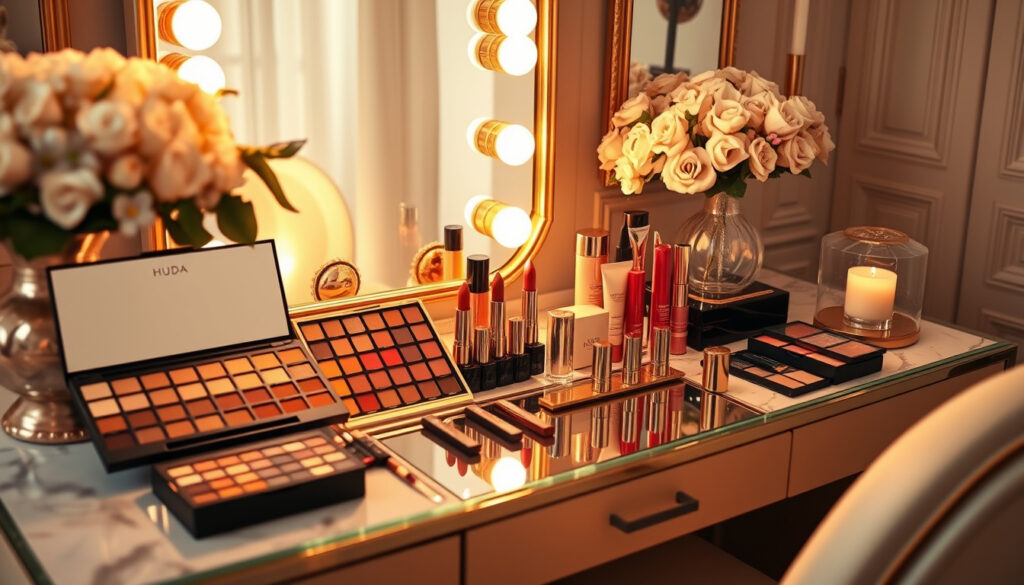
Huda Beauty: Owner, Net Worth, and Brand Facts
There’s a reason the name Huda Kattan keeps popping up in conversations about beauty and business: she built a global cosmetics empire from a blog and a single eyelash product. Huda Beauty, founded in Dubai in 2013, now sits at an interesting crossroads between prestige and mass market, with its founder’s fortune often misreported.
Founded: 2013 ·
Founder: Huda Kattan ·
Country of Origin: United Arab Emirates ·
Estimated Net Worth (Founder): $400 million (Forbes) ·
Retailers: Sephora, Harrods, Boots
Quick snapshot
- Huda Kattan is the founder and owner (Huda Beauty official site)
- Brand launched in 2013 in Dubai, UAE (Forbes Middle East)
- Founder is of Iraqi descent and Iraqi-American (Forward2Me profile)
- Whether Huda Beauty is a “luxury” or “prestige” brand is subjective and varies by market
- The exact current net worth of Huda Kattan is not publicly confirmed
- Brand valuation of $1 billion is not independently verified
- Exact blog launch date (2010 vs 2011) is inconsistently reported
- 2013 – Huda Beauty cosmetics line launches (Wikipedia)
- 2015 – Lashes line gains international attention (Forbes Middle East)
- 2017 – Expansion into Sephora globally (Wikipedia)
- 2021 – Forbes estimates Huda Kattan’s net worth at $400 million (Wikipedia)
- Further expansion into skincare and fragrance
- Potential IPO or acquisition rumours unconfirmed
- Increased competition from indie and direct-to-consumer brands
Seven key facts about the brand, from ownership to retail reach:
| Field | Value |
|---|---|
| Founder | Huda Kattan |
| Year Founded | 2013 |
| Country of Origin | United Arab Emirates |
| Founder’s Net Worth | $400 million (Forbes estimate) |
| Founder’s Ethnicity | Iraqi |
| Product Categories | Makeup, Skincare, Fragrance |
| Key Retailers | Sephora, Harrods, Boots |
Who is the owner of Huda Beauty?
Huda Kattan’s background
- Huda Kattan was born in Oklahoma in 1983 to Iraqi parents who later moved to Tennessee (Forward2Me).
- Before launching the brand, she worked as a makeup artist and started a beauty blog in 2010 (Wikipedia).
- She holds a degree in finance from the University of Michigan–Dearborn.
Huda Kattan’s role in the company
- Huda Kattan is the founder and creative force behind the brand (Huda Beauty official site).
- Her sister Mona Kattan is also a co-founder and oversees fragrance and business operations (Wikipedia).
- The company remains privately held; no public ownership changes have been announced.
Which country is Huda Beauty from?
The brand’s origin is often assumed to be American because of Huda Kattan’s background, but the company is headquartered in the United Arab Emirates.
Headquarters location
- Huda Beauty has its headquarters in Dubai, UAE (Forbes Middle East).
- The company is registered as a UAE-based entity and benefits from Dubai’s free trade zones.
Manufacturing and distribution
- Manufacturing is outsourced to third-party facilities, primarily in Italy and China.
- Global distribution is managed from Dubai and through regional hubs in the US and Europe.
The pattern: Though the brand has American roots through its founder, its corporate identity and operational base are firmly Middle Eastern. This gives it dual appeal – credibility in Western markets and authenticity in the Gulf region.
Is Huda Beauty a luxury makeup brand?
There is no official classification, but the brand’s pricing and retail placement place it in the “prestige” tier – above drugstore but below heritage luxury houses like Chanel.
Price positioning
- Eyeshadow palettes typically retail between $60 and $70 (Sephora).
- Foundations are priced around $40–50.
- This places Huda Beauty in the same range as brands like Too Faced and Anastasia Beverly Hills.
Retail channels
- Sold at Sephora, Harrods, and Boots – all prestige or department-store retailers.
- Not available in drugstores like CVS or Walgreens in the US.
Comparison to mass-market and prestige brands
- Drugstore brands (e.g., Maybelline) average $10–20 per product.
- Prestige brands (e.g., NARS, MAC) average $30–60.
- Luxury brands (e.g., Gucci Beauty) average $70–150+.
- Huda Beauty sits in the upper prestige bracket, not true luxury.
The implication: Consumers paying $60 for a palette expect luxury-level formula and packaging. Huda Beauty competes on color payoff and social-media hype but often lacks the heritage and exclusivity of true luxury. For shoppers deciding between a Huda palette and a Tom Ford one, the gap is not just price – it’s perception.
Is Huda Kattan a millionaire or a billionaire?
Reports of Huda Kattan being a billionaire are incorrect. She is a millionaire, with Forbes providing the most cited estimate.
Forbes estimated net worth
- In 2021, Forbes Middle East listed her net worth at $400 million (Forbes Middle East).
- Earlier 2020 estimates from Forbes were $510 million.
- Some 2025 profiles cite $550–610 million, but these are not independently confirmed.
Sources of wealth
- Majority from Huda Beauty profits, plus endorsement deals and Khloe Kardashian collaborations.
- Minor investments in real estate and technology.
Public claims vs. verified data
- CNBC reported a $1 billion valuation for Huda Beauty in 2018 (CNBC Make It).
- However, valuation does not equal founder’s personal net worth, especially when the company is not sold.
- No credible source has claimed Huda Kattan is a billionaire.
A $1 billion company valuation can easily trick readers into thinking the founder is a billionaire. But as a private business, Kattan’s ownership stake and debt obligations mean her liquid wealth is far lower. For journalists and investors, the $400 million figure from Forbes remains the most reliable benchmark.
What is Huda Kattan’s ethnicity?
Family background
- Huda Kattan was born to Iraqi parents who immigrated to the United States (Sephora/YouTube interview).
- She has referred to herself as Arab American.
Cultural identity
- Forbes Middle East lists her nationality as Iraqi-American (Forbes Middle East).
- She has stated that her heritage heavily influences the brand’s aesthetics, especially in eyelash products.
The implication: Her mixed cultural background is a strength – she appeals to both Middle Eastern and Western consumers. For beauty buyers looking for representation, Huda Kattan is one of the most prominent Arab American entrepreneurs in the industry.
What are the weaknesses of Huda Beauty?
Upsides
- Strong social media presence and influencer trust
- High pigmentation and bold color payoff
- Rapid product innovation (lashes, foundations, skincare)
Downsides
- Mixed reviews on foundation texture and wear (some users report cakey finish)
- High price point limits accessibility compared to drugstore alternatives
- Heavy dependence on founder’s personal brand, creating succession risk
- Limited shade range in early foundation launches (improved but still lagging behind Fenty)
The trade-off: Huda Beauty’s reliance on the founder’s celebrity gives it a powerful launchpad but also makes it vulnerable if public perception shifts. Competitors like Rare Beauty and Fenty have broader shade ranges and more consistent product quality.
Timeline: key milestones
- 2013 – Huda Beauty launched as a cosmetics line by Huda Kattan (Huda Beauty official site).
- 2015 – Brand gains international attention with the launch of the “Lashes” line (Forbes Middle East).
- 2017 – Expansion into Sephora stores globally (Wikipedia).
- 2021 – Forbes estimates Huda Kattan’s net worth at $400 million.
What this means: From a $6,500 investment by her sister Alya (Forbes Middle East) to a billion-dollar valuation in just four years, Huda Beauty’s growth mirrors the influencer-to-empire model that few have replicated at scale.
Clarity: confirmed facts vs. what remains unclear
Confirmed facts
- Huda Kattan is the founder and owner of Huda Beauty.
- Huda Beauty was founded in 2013 in Dubai, UAE.
- Huda Kattan’s net worth is estimated at $400 million by Forbes.
- Huda Kattan is of Iraqi descent and identifies as Arab American.
What’s unclear
- Whether Huda Beauty is classified as “luxury” or “prestige” is subjective and varies by market.
- The exact current net worth of Huda Kattan is not publicly confirmed.
- Brand valuation of $1 billion is not independently audited.
- Exact details of manufacturing locations and labor practices remain opaque.
Expert perspectives
“I started my blog as a way to share makeup tips, but I never imagined it would turn into a global brand. It just shows that if you are passionate and consistent, you can build something real.”
Huda Kattan, in a Forbes Middle East interview (Forbes Middle East)
“Huda Kattan’s net worth is estimated at $400 million, making her one of the most successful beauty entrepreneurs in the Middle East.”
Forbes Middle East editorial note (Forbes Middle East)
pulse2.com, scribd.com, cosmopolitanme.com, instagram.com, instagram.com, makeup.com
Frequently asked questions
Is Huda Beauty cruelty-free?
Huda Beauty states it does not test on animals, but it sells in mainland China where animal testing is required by law for imported cosmetics. The brand is not certified cruely-free by PETA or Leaping Bunny.
Where can I buy Huda Beauty products?
Available at Sephora, Harrods, Boots, and the brand’s official website. Also stocked by Cult Beauty and Look Fantastic.
Does Huda Beauty test on animals?
It does not conduct animal testing itself, but regulatory requirements in China may involve third-party testing. The brand has not fully exited the Chinese market.
What is Huda Beauty’s most popular product?
The “Rose Gold Remastered” eyeshadow palette and the “Faux Filter” foundation are consistently top sellers.
Is Huda Beauty available in Ireland?
Yes, through the brand’s website, Sephora UK (which ships to Ireland), and selected Boots stores in Northern Ireland.
Does Huda Beauty have a perfume?
Yes, under the “Kayali” sub-brand launched by Mona Kattan, with fragrances like “Elixir” and “Lovefest.”
What is Huda Beauty’s return policy?
On the official site, returns are accepted within 30 days of purchase for unopened and unused products.
Related reading
- Pharrell Williams: Synesthesia, Net Worth, Louis Vuitton & Family – another creative force shaping brand perception.
- Michael Hill Rings: Prices, Stores & Contact (2025 Guide) – an example of a brand guide format similar to this one.
For anyone researching Huda Beauty – whether as a shopper, competitor, or investor – the core takeaway is that the brand thrives on its founder’s personal story and social media prowess, but its financial reality is less spectacular than headlines suggest. Huda Kattan is a wealthy entrepreneur, not a billionaire, and the brand occupies a crowded prestige tier where differentiation is increasingly difficult. For consumers in the US and UK deciding where to spend $60 on an eyeshadow palette, the choice between Huda Beauty and a heritage luxury house comes down to whether you value viral hype or timeless exclusivity.
More related posts
 Georgia Love Split, Career, and Podcasts: Full Update (2026)
 Ayatollah Khomeini: Biography of Iran’s First Supreme Leader
 Early Stage Skin Cancer: Symptoms, Warning Signs & Pictures
 Kevin Federline Today: Career, Net Worth, Memoir & More
 Qatar Airways Airlines Review: Economy Class vs Emirates
 AI Chatbot Guide: Free, Legal, and Best Options
 Jack Nicholson: Health, Family, Career & Latest Updates
 Roger Tuivasa-Sheck: Career, Injury & Wakefield Move
