Mother of Pearl: What It Is, Properties, and Care
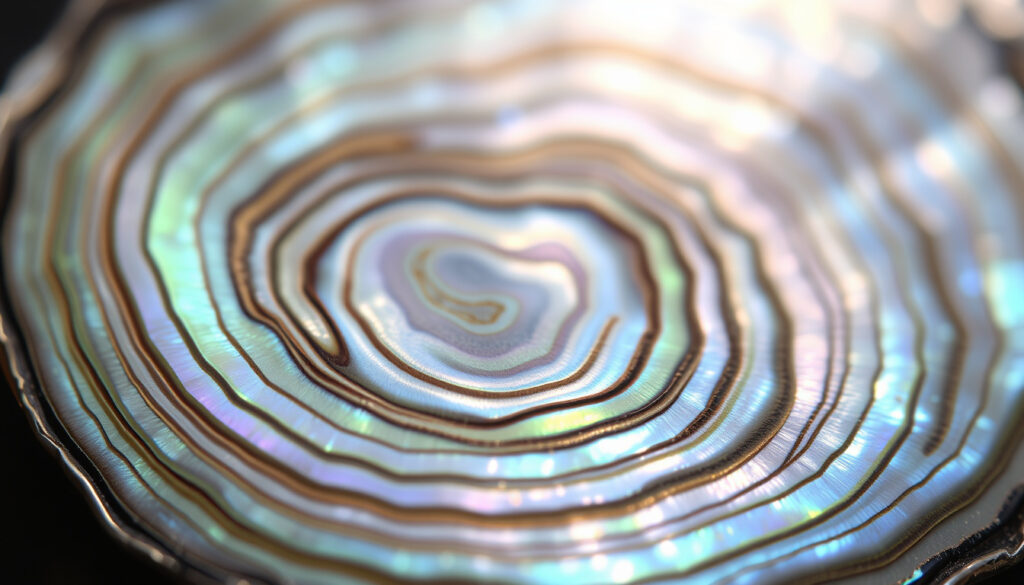
Walk along any jewelry counter and you’ll spot it: that shimmering, rainbow-like sheen that sets certain pieces apart. That’s mother of pearl — the iridescent inner layer of mollusk shells, known to scientists as nacre. Cultures around the world have used it in ornaments and inlay for well over two thousand years The Pearl Source (jewelry industry expert), yet most people know surprisingly little about how it forms, why it glows, and who should — or shouldn’t — wear it. This guide pulls together the biology, the beauty, and the practical care tips so you can decide if this ancient material belongs in your collection.
Mohs hardness: 3.5–4 Gemstones.com (gemological resource) ·
Composition: calcium carbonate (aragonite) with conchiolin Fire Mountain Gems (beading and jewelry supplier) ·
Primary sources: oysters, abalone, mussels, freshwater mollusks Fire Mountain Gems ·
Iridescence mechanism: light interference in layered aragonite platelets Gemstones.com
Quick snapshot
- Mother of pearl is nacre, an organic-inorganic composite (The Pearl Source).
- Produced by bivalve and gastropod mollusks (Gemstones.com).
- Used in human ornaments for over 2,000 years (The Pearl Source).
- Iridescence is caused by thin-layer interference (Gemstones.com).
- Exact historical origin of the term “mother of pearl” is undocumented. (Gemstones.com)
- The precise evolutionary advantage of nacre’s microstructure is still debated (Gemstones.com).
- No major timeline events reported; mother of pearl has been used continuously for millennia.
- Continued popularity in sustainable jewelry and interior design (The Pearl Source).
Five key facts, one pattern: the science behind mother of pearl is both ancient and surprisingly sophisticated, blending biology with optical physics.
| Attribute | Value |
|---|---|
| Scientific name | Nacre |
| Composition | ~95% calcium carbonate (aragonite), 5% organic protein (conchiolin) Fire Mountain Gems |
| Hardness | 3.5–4 on Mohs scale Gemstones.com |
| Color range | White, silver, pink, green, gold, black (iridescent) Sage Goddess (crystal and metaphysical guide) |
| Sources | Oysters, abalone, freshwater mussels, nautilus Fire Mountain Gems |
What actually is mother of pearl?
The science behind nacre
- Mother of pearl is the common name for nacre, an organic-inorganic composite produced by certain mollusks as an inner shell layer (The Pearl Source).
- It is composed of hexagonal aragonite tablets bound by conchiolin protein (Gemstones.com).
- The layered structure causes iridescence via light interference (Gemstones.com).
Think of it as a biological brick wall: the aragonite platelets are the bricks, and conchiolin is the mortar. When light hits those stacked layers, some wavelengths bounce back reinforced while others cancel out, producing that signature rainbow shimmer. This microstructure also gives nacre remarkable toughness — it’s 3,000 times more fracture-resistant than pure aragonite, according to material science studies cited by Gemstones.com.
How mollusks create mother of pearl
- Mother of pearl is formed as a defense mechanism when a mollusk secretes nacre around an irritant or parasite (The Pearl Source).
- The process is identical to how a pearl forms, but instead of coating a single piece of grit, the mollusk lines the entire inside of its shell (The Pearl Source).
The implication: every piece of mother of pearl is a record of a living creature’s response to irritation — an armor made beautiful. What looks like decoration to us was originally survival.
Because nacre forms only as the mollusk grows, harvesting mother of pearl always involves the death of the animal. That’s why sustainable sourcing matters — and why cultured alternatives are becoming more common.
What’s another name for mother of pearl?
Nacre as the scientific term
- Nacre is the scientific name for mother of pearl (The Pearl Source).
- The word “nacre” comes from Arabic naqqarah (drum) via French (Wikipedia (encyclopedic resource)).
Other common names and synonyms
- Also referred to as “pearl shell” or “shell pearl” in trade (Fire Mountain Gems).
- In some contexts, it’s simply called “mother of pearl” — no synonym captures the full material.
The catch: while “nacre” is precise, “mother of pearl” has stuck for good reason — it’s the term customers search for, and the one that appears in crossword puzzle clues as a five-letter answer.
Why is mother of pearl so special?
Exceptional toughness and resilience
- Nacre is 3,000 times more fracture-resistant than pure aragonite due to its brick-and-mortar microstructure (Gemstones.com).
- Used in jewelry, watches, buttons, and furniture inlay for centuries (The Pearl Source).
Iridescence and color play
- Iridescence comes from differential refraction of light waves off the aragonite layers (Gemstones.com).
- Mother of pearl can vary in color from white to iridescent shades of pink, blue, and green (Sage Goddess).
Historical and cultural significance
- Symbolizes protection and purity in many cultures (Rock Paradise (crystal metaphysical guide)).
- Used in ancient Egypt, China, and Mesoamerica for decorative and ceremonial objects.
That stunning iridescence comes at a cost: mother of pearl ranks only 3.5–4 on the Mohs scale, meaning it scratches far more easily than quartz or topaz. Daily wear rings are risky.
Who shouldn’t wear mother of pearl?
Allergies and sensitivities
- Virtually hypoallergenic; rare allergic reactions to conchiolin have been reported (The Pearl Source).
- Generally safe for sensitive skin, but those with severe shellfish protein allergies should consult a dermatologist.
Astrological and spiritual beliefs
- Some cultural beliefs associate mother of pearl with negative energy for certain zodiac signs (Rock Paradise).
- In many traditions, pearls (and by extension mother of pearl) are considered unlucky for brides because they are associated with tears.
Practical durability considerations
- Soft material (3.5–4 Mohs) prone to scratches; not ideal for daily wear rings (Gemstones.com).
- Should be removed before contact with perfumes, household cleaners, and acidic substances (The Pearl Source).
- Avoid prolonged exposure to water as it can dull the luster over time (The Pearl Source).
The pattern: mother of pearl isn’t for everyone, but restrictions are mostly about care and belief, not chemistry. For most people, occasional wear is perfectly safe.
What is the 5 letter word for mother of pearl?
Common crossword answer: NACRE
- The standard 5‑letter crossword clue answer is “NACRE” (Wikipedia).
- Occasionally “PEARL” appears but refers to the gem, not the material.
Other five-letter variants
- No other common five-letter synonyms exist; “nacre” is the dominant term in puzzles.
Why this matters: for crossword enthusiasts, “mother of pearl” is almost always clued as NACRE. Knowing this could save your Saturday puzzle.
Upsides
- Beautiful iridescent luster unique to each piece
- Hypoallergenic for most wearers
- Rich in historical and cultural meaning
- Relatively affordable compared to pearls or abalone
Downsides
- Soft (3.5–4 Mohs) — scratches easily
- Susceptible to damage from acids, perfumes, and water
- Not suitable for everyday rings or bracelets
- Some spiritual traditions advise against it for certain zodiacs or weddings
What we know — and what we don’t
Confirmed facts
- Mother of pearl is nacre, an organic-inorganic composite (The Pearl Source).
- Produced by bivalve and gastropod mollusks (Gemstones.com).
- Used in human ornaments for over 2,000 years (The Pearl Source).
- Iridescence is caused by thin-layer interference (Gemstones.com).
What’s unclear
- Exact historical origin of the term “mother of pearl” is undocumented.
- The precise evolutionary advantage of nacre’s microstructure is still debated (Gemstones.com).
Expert voices
“Nacre is composed of hexagonal platelets of aragonite (a form of calcium carbonate) 10–20 µm wide and 0.5 µm thick, arranged in a continuous parallel lamina.”
Wikipedia (encyclopedic resource)
“Mother of pearl is the same material as pearls, meaning pearls and the shell lining are compositionally related. It is formed as a defense mechanism when a mollusk secretes nacre around an irritant or parasite.”
The Pearl Source (jewelry industry expert)
“Mother of pearl is made up of brick-like layers of hexagonal aragonite platelets. The iridescence comes from differential refraction of light waves off these layers.”
Gemstones.com (gemological resource)
For anyone considering mother of pearl jewelry, the choice is clear: treat it with care, and it will reward you with decades of subtle iridescence. But if you need a ring for daily wear, the trade-off with a harder gemstone is unavoidable. For collectors and occasional wearers, mother of pearl offers a unique blend of natural wonder and human artistry that few other materials can match.
Related reading: Fish Oil Benefits | Lancôme La Vie Est Belle Guide
enchanting-earth.com, rockparadise.com, lovetoknow.com, celticdesignscotland.com
Frequently asked questions
Can mother of pearl be worn every day?
It can, but it requires caution. Because mother of pearl is soft (Mohs 3.5–4), it’s prone to scratches and damage from chemicals. Reserve it for special occasions or protect it carefully if worn daily (The Pearl Source).
How can I tell if mother of pearl is real?
Real mother of pearl feels cool to the touch and shows natural, uneven iridescence. Plastic imitations feel warm and have uniform color. A simple scratch test (on an inconspicuous area) can also help — mother of pearl scratches more easily than imitations (Gemstones.com).
What is the spiritual meaning of mother of pearl?
Many cultures associate mother of pearl with protection, purity, and emotional balance. It is often used in meditation and crystal healing to promote calm and self-reflection (Rock Paradise).
Is mother of pearl the same as a pearl?
They are made of the same material (nacre), but pearls are solid spherical concretions formed around an irritant, while mother of pearl is the lining of the shell. Both are composed of aragonite and conchiolin (The Pearl Source).
How should I store mother of pearl jewelry?
Store mother of pearl separately in a soft cloth pouch or jewelry box to avoid scratches from harder gems. Keep it away from direct sunlight and extreme temperatures (The Pearl Source).
Does mother of pearl fade over time?
Mother of pearl can lose its luster if exposed to harsh chemicals, prolonged water, or excessive heat. With proper care, however, it retains its iridescence for decades (Fire Mountain Gems).
What is the difference between natural and cultured mother of pearl?
Natural mother of pearl comes from wild-harvested mollusks, while cultured mother of pearl is farmed in controlled environments. Cultured material is more sustainable and often has more uniform quality, but both are chemically identical (Fire Mountain Gems).
More related posts
 Son of Sardaar 2 – Release Date, Cast & Plot Details
 Hilltop Hoods: Biography, Top Songs & Tour Dates (2025)
 Abby Bergman: Age, Career, and Life After The InBESTigators
 Slow Cooked Lamb Shoulder: Oven & Slow Cooker Times
 King the Land: Hit or Flop? Ratings, Ending & Facts
 Shah Rukh Khan: Biography, Religion, Net Worth & Health
 Imagine Dragons: Dan Reynolds, Biggest Hits, LGBTQ Advocacy, and More
 Page Size Checker UploadArticle.com – Free Tools and Optimization Tips
