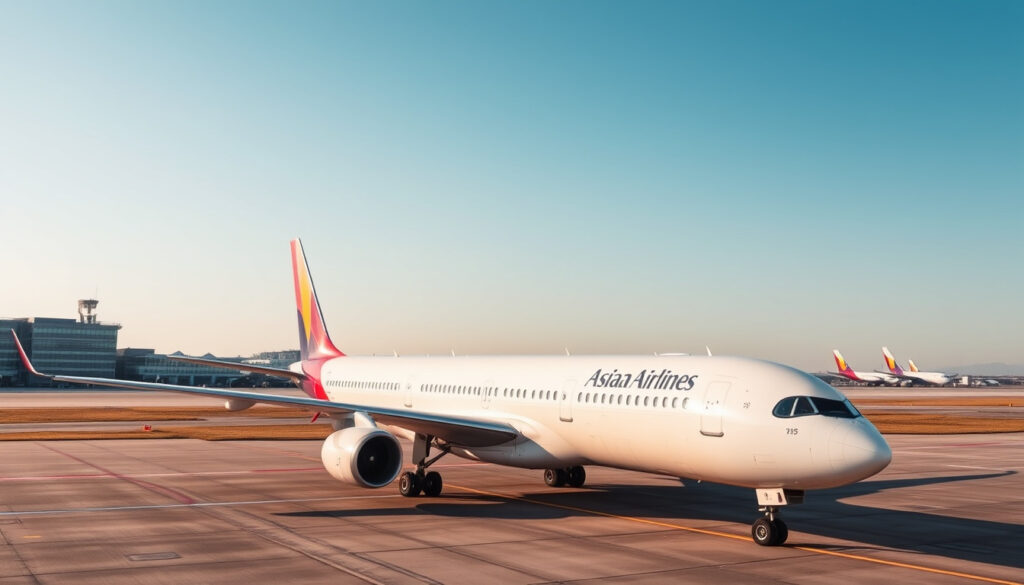
Asiana Airlines: Ownership, Safety, and Service Review
Few airlines carry a story as layered as Asiana Airlines — a merger years in the making, a single fatal crash that still draws questions, and a Skytrax 5-Star rating that puts it in elite company. This article separates fact from speculation, looking at ownership, safety, service, and how Asiana compares with rivals like ANA.
Founded: 1988 ·
Destinations: 80+ (international and domestic) ·
Fleet size: 80+ aircraft ·
Skytrax rating: 5-Star ·
Headquarters: Seoul, South Korea ·
Owner: Korean Air (merger pending)
Quick snapshot
- Acquired by Korean Air in 2020 (Wikipedia (timeline source))
- Integration still in progress (Wikipedia (timeline source))
- Operates independently under same group (Wikipedia (timeline source))
- One fatal crash (2013, San Francisco) (Wikipedia (accident report))
- 3 fatalities, 183 injuries (Wikipedia (accident report))
- Ongoing safety certifications (AirlineRatings.com (safety rating source))
- Skytrax 5-Star Airline (Wendy Wu Tours (travel specialist))
- Full-service carrier (Wendy Wu Tours (travel specialist))
- Premium Business and First Class (Wendy Wu Tours (travel specialist))
- 90+ international routes (Wikipedia (route network))
- 14 domestic routes (Wikipedia (route network))
- Hub: Incheon Airport, Seoul (Wikipedia (route network))
Six key identifiers define Asiana’s operational profile at a glance.
| IATA Code | OZ |
| ICAO Code | AAR |
| Alliance | Star Alliance |
| Frequent Flyer Program | Asiana Club |
| Year of First Flight | 1988 |
| Employees | ~10,000 (2023) |
Is Asiana owned by Korean Air?
Yes — but the transition hasn’t been immediate. The South Korean government approved Korean Air’s acquisition of Asiana Airlines in November 2020 as a consolidation measure for the country’s aviation sector (Wikipedia (government policy source)). The merger, initially expected to close in 2024, now has a scheduled effective date of December 17, 2026, according to multiple industry reports (Business Traveller (industry publication)).
For now, Asiana continues to operate as a separate brand under the Korean Air parent umbrella. The integration process has required the combined entity to surrender airport slots on 26 international and 8 domestic routes to satisfy competition regulators (Reddit (travel community discussion)).
The pattern: Ownership is settled, but the operational separation continues to matter for travelers.
How safe is Asiana Airlines?
Asiana’s safety record contains one major incident that overshadows an otherwise strong operational history. On July 6, 2013, Asiana Airlines Flight 214 crashed while landing at San Francisco International Airport, resulting in three fatalities and 183 injuries (Wikipedia (NTSB investigation)).
How many people died in the Asiana Airlines crash?
- Three people died — all Chinese nationals seated in the rear of the aircraft. The NTSB (accident investigation authority) determined the cause was pilot error during the approach.
What airline has 0 fatal crashes?
- Several carriers claim zero fatal accidents, but no airline is truly risk-free. According to AirlineRatings (safety monitoring body), the safest airlines by accident records include Qantas and Emirates, though Asiana has only one fatal crash in 35+ years of operations.
How did Guy in Seat 11A survive?
- Survivor stories from Seat 11A of Flight 214 are often cited, but specific details remain unclear. The NTSB report noted that passengers in the forward section experienced less severe impact forces, but individual survival mechanisms vary widely.
Beyond that single crash, Asiana has maintained a solid safety reputation. The carrier saw its safety score jump from 2/7 to 6/7 in October 2024, reflecting improved incident data (AirlineRatings.com (safety rating source)). Between 2019 and the improvement period, total accidents fell from 52 to 38, according to AirlineRatings’ social media (safety data source). However, the exact accident definitions and classifications behind those numbers still carry some uncertainty.
Asiana’s safety record is strong by the numbers, but the 2013 crash remains a persistent narrative that affects public perception more than the data alone.
The implication: Safety ratings alone don’t erase the memory of 2013.
Is Asiana a luxury airline?
Asiana Airlines is a full-service carrier — not a budget airline — and it holds a Skytrax 5-Star rating. Only about 10 airlines globally carried that rating at the time of the most recent review (Wendy Wu Tours (travel specialist)). The rating reflects standards across seats, amenities, catering, inflight entertainment, cleanliness, and both cabin and ground staff service.
Is Asiana Airlines a budget airline?
- No. Asiana is a full-service carrier that competes with other premium Asian airlines like Korean Air, ANA, and Cathay Pacific. It offers Business and First Class cabins, lounge access, and a comprehensive frequent flyer program.
The implication: Asiana sits in the premium tier, not the low-cost segment. Its onboard product, particularly in premium cabins, is consistently praised in traveler reviews.
Is Asiana Airlines good or bad?
Overall reputation is positive, supported by industry awards and customer satisfaction metrics. The 5-Star Skytrax rating — held for 17 consecutive years (Wendy Wu Tours (travel specialist)) — signals consistent product quality. However, older aircraft on some routes and lingering uncertainty about the merger weigh on the overall experience.
Upsides
- Skytrax 5-Star rating for 17 consecutive years
- Full-service with premium cabins and lounge access
- Strong network to Asia and the Americas
- High customer satisfaction ratings on service
Downsides
- One fatal crash (2013) remains a reputational concern
- Merger integration creates uncertainty about future service consistency
- Some aircraft are older than competitors’ fleets
- Loyalty program changes post-merger are still unclear
The trade-off: Asiana delivers a premium product that many passengers love, but the merger cloud and aging fleet on some routes create legitimate hesitation for frequent flyers.
Which is better, Ana or Asiana?
Comparing Asiana with ANA (All Nippon Airways) reveals two top-tier carriers with different strengths. Both hold Skytrax 5-Star ratings, but their route networks, cabin products, and frequent flyer programs diverge significantly.
| Feature | Asiana Airlines | ANA (All Nippon Airways) |
|---|---|---|
| Skytrax Rating | 5-Star | 5-Star |
| Alliance | Star Alliance | Star Alliance |
| Hub | Incheon (Seoul) | Narita/Haneda (Tokyo) |
| International Destinations | ~90 | ~100+ |
| Premium Cabin | First & Business Class | First, Business & Premium Economy |
| Frequent Flyer Program | Asiana Club | ANA Mileage Club |
| Merger Status | Being absorbed by Korean Air (2026) | Independent |
For travelers flying frequently to Japan, ANA’s Tokyo hub and denser Asian network give it an edge. For those focused on Korean routes and broader Star Alliance connectivity, Asiana’s Incheon hub provides excellent links. The merger uncertainty may tip the scale toward ANA for travelers who value long-term stability.
Timeline: Key Events in Asiana Airlines’ History
- 1988: Asiana Airlines is founded (Wikipedia (corporate history))
- 2000: Joins Star Alliance (Wikipedia (alliance membership))
- 2013-07-06: Asiana Airlines Flight 214 crashes in San Francisco — 3 fatalities
- 2020: Korean Air announces acquisition of Asiana (Wikipedia (merger announcement))
- 2024–2026: Merger integration continues; full absorption scheduled for December 2026 (Business Traveller (merger timeline))
The arc: From startup to Star Alliance to its only fatal accident to a government-driven merger — Asiana’s trajectory remains in flux.
What’s clear and what’s not
Based on available data, some aspects of Asiana’s story are well-documented while others remain speculative.
Confirmed facts
- Asiana Airlines was founded in 1988 (Wikipedia (corporate history))
- It is a 5-Star Skytrax carrier (Wendy Wu Tours (travel specialist))
- Korean Air acquired Asiana in 2020 (Wikipedia (merger source))
- Flight 214 crash occurred in 2013 with 3 fatalities (Wikipedia (accident report))
What’s unclear
- Exact merger completion date and branding changes after 2026
- Future of Asiana Club loyalty program post-merger
- Specific details of Seat 11A survival mechanism
- How cabin product upgrades will be handled during transition
The pattern: Confirmed facts anchor the narrative, while open questions remain around the merger’s long-term impact.
Quotes from the industry
Asiana Airlines is committed to providing safe, reliable, and comfortable air transportation services to our customers.
— Asiana Airlines official statement (corporate website)
Korean Air is certified as a 5-Star Airline, reflecting the highest standards of airport and onboard product quality.
The NTSB determined the probable cause of the Asiana Flight 214 accident was the flight crew’s mismanagement of the approach.
— NTSB (accident investigation authority)
These perspectives from the airline itself, an independent rating organization, and the accident investigator frame Asiana’s current standing: strong commitment to quality, recognized premium status, and a past accident that the company has worked to overcome.
Asiana’s narrative is shaped by three forces — its Skytrax status, its merger future, and its singular crash — that pull in different directions. Travelers need to weigh each factor according to their own priorities.
The takeaway: Each source reinforces a different aspect of Asiana’s identity, leaving travelers to balance them.
For travelers weighing Asiana against competitors like ANA, the choice comes down to a simple trade-off: Asiana offers a premium Asian experience with a 5-Star label, but the ongoing merger creates uncertainty about long-term product consistency. If you value immediate service quality and a well-established route network from Seoul, Asiana remains a strong pick. But if stability and a clear long-term loyalty program matter more, ANA’s independent future holds fewer question marks.
awardfares.com, turbli.com, reddit.com, aeroinside.com, youtube.com, archive.org
For a more detailed look at the carrier’s current standing, the Asiana Airlines 2025 Guide provides updated ratings and merger information.
Frequently asked questions
Does Asiana Airlines have first class?
Yes, Asiana Airlines operates First Class cabins on select long-haul routes, featuring lie-flat seats and premium dining.
What destinations does Asiana Airlines fly to?
Asiana serves over 90 international destinations across Asia, Europe, and the Americas, plus 14 domestic routes in South Korea.
Is Asiana Airlines part of an alliance?
Yes, Asiana is a member of Star Alliance, giving passengers access to the alliance’s global network and reciprocal benefits.
How do I contact Asiana Airlines customer service?
Contact options include phone support, the airline’s official website, and airport ticketing counters. Specific numbers vary by country.
What is the baggage policy for Asiana Airlines?
Asiana offers free checked baggage based on route and fare class; typical allowances include one to two bags up to 23 kg each in economy.
Can I use Asiana Club miles on Korean Air?
Currently, Asiana Club and Korean Air’s loyalty programs remain separate. Post-merger integration plans have not yet specified mile transfer options.
More related posts
 Michael Hill Rings: Prices, Stores & Contact (2025 Guide)
 Raine Spencer: Life, Relationship with Diana, and Death
 Roy Cohn: Conviction, Trump Mentor, and Disgraced Death
 Chace Crawford: Wife, Ex, Kids, Ethnicity, and Career
 Dogue de Bordeaux: Family Dog, Lifespan, Temperament & Care Guide
 John Wayne: Death, Life, Legacy – Separating Myth from Fact
 Catherine O’Hara Cause of Death: Pulmonary Embolism Truth
 Dennis Cometti: Cause of Death, Quotes, and Legacy
